
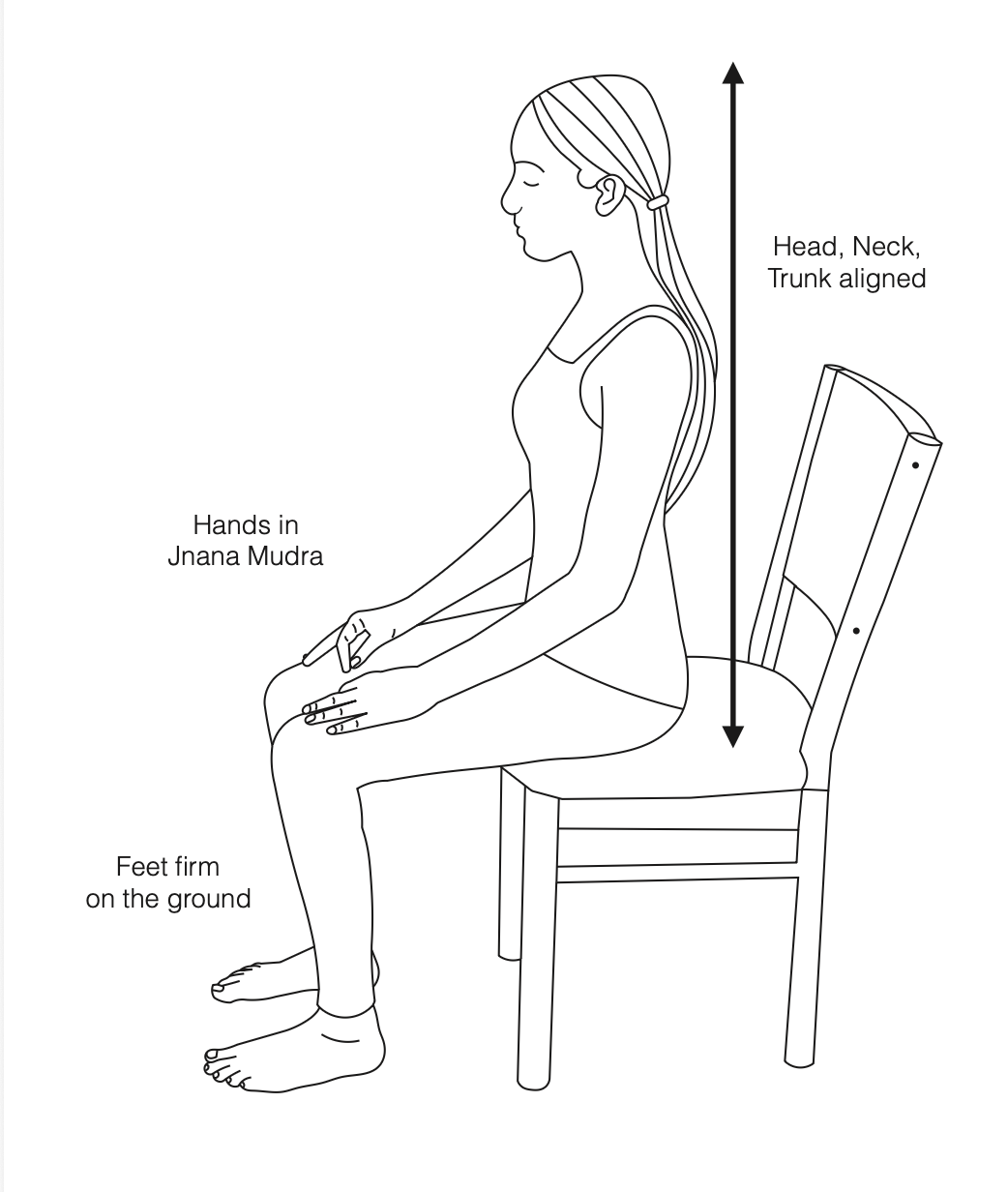
How to sit in meditation Part 1/2
A stable, comfortable seated posture is the foundation of any serious meditation practice. This post outlines the five essential criteria for a correct meditative seat—spinal alignment, a firm triangular base, assimilated limbs, interlocked feet, and Jnana Mudra—drawing on the Bhagavad Gita’s guidance on keeping the trunk, head, and neck in one straight line. You’ll also find practical advice on building a proper meditation seat and an honest assessment of meditative postures.

Asanas
Asana means “seat” in Sanskrit. In Yoga, the different poses or postures are called asanas. There is only one sutra in The Yoga Sutras of Patanjali that mentions the word asanas. It says: Sthira sukham asanam. Sthira means “steady” and indicates a static pose without movement. While sukham typically means “happy,” it means “comfortable” or “relaxed” in this case. This sutra indicates that The Yoga Sutras are referring to static poses, not done in the spirit of competition.

Essential Asanas
Asanas are not the end of the practice but only a part of the practice. Static asanas are not exercises as understood by the conventional sense of the word.