
HOw to sit in meditation part 2/2
AI Summary: This article is an excerpt from my book Mastering Pranayama published in 2018. Building on the foundations of Part 1, this post takes you through the remaining classical seated postures: Ardha Padmasana, Padmasana, Svastikasana, and Siddhasana. The central recommendation is Svastikasana. It is structurally sound, accessible with practice, and the most practical posture for pranayama and highly recommended for those who aspire to gain mastery in systematic meditation. The post closes with a simple guiding principle—the best posture is the one you can actually sit still in. It provides a realistic roadmap from chair to floor, grounded in patience, consistent loosening exercises, and honest self-assessment rather than ambition.
Ardha Padmasana: The Half Lotus Pose
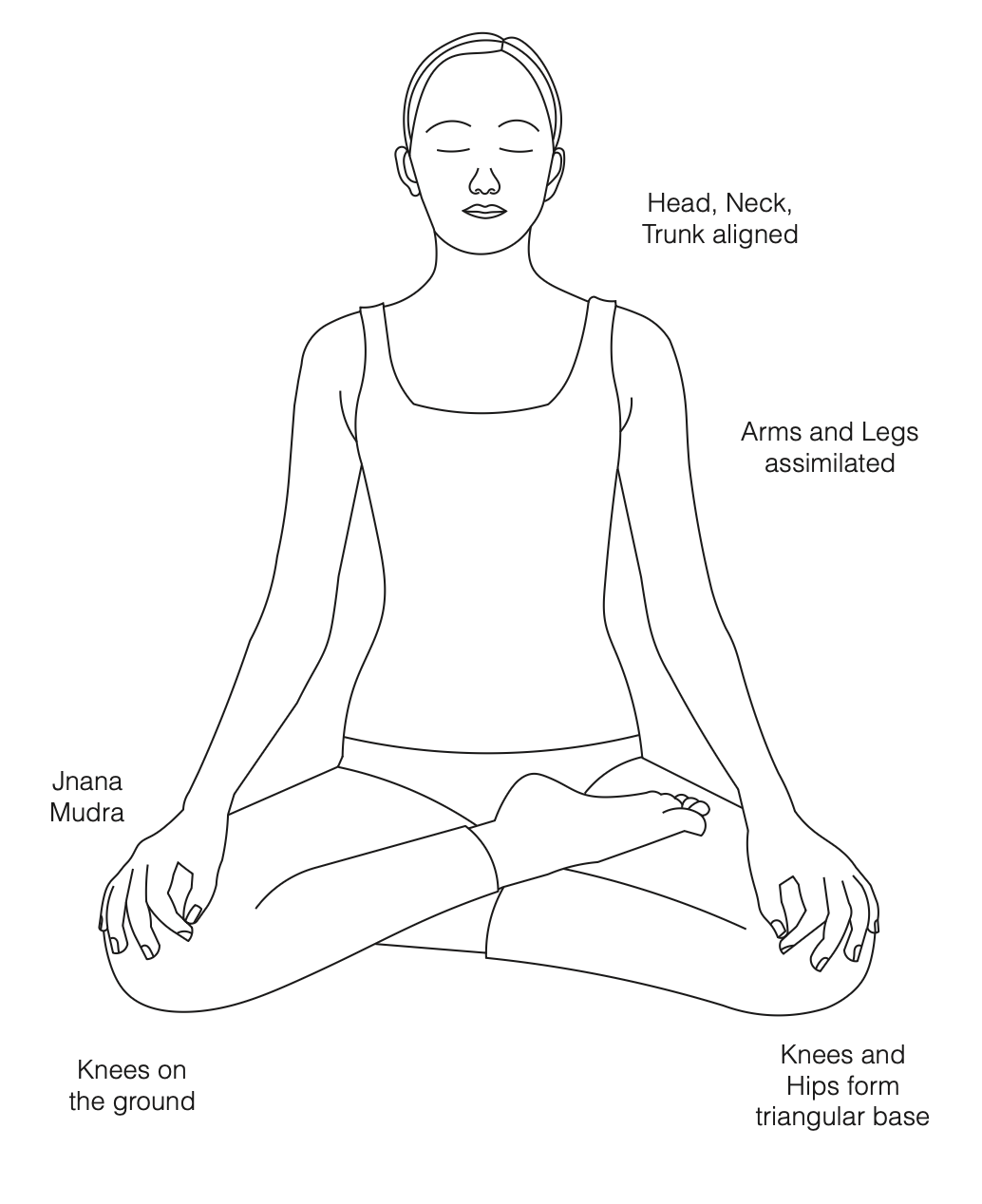
Ardhapadmasana Credit: Mastering Pranayama by Radhika Shah Grouven
Ardha means “half.” Padma means “lotus.”
Sit on your meditation blanket. Bend your right leg and place the right foot on the left thigh. Alternatively, you can bend your left leg and place the left foot on the right thigh. Keep the fingers in Jnana Mudra. This is the Half Lotus Pose.
Ardha Padmasana provides a firm base since both the knees are on the floor. You can also assimilate the legs well but only one of the feet is locked. It is a good exercise for the ankles and not as difficult as Padmasana. You can also use layers of thin shawls to master this pose gradually.
Padmasana: The Lotus Pose
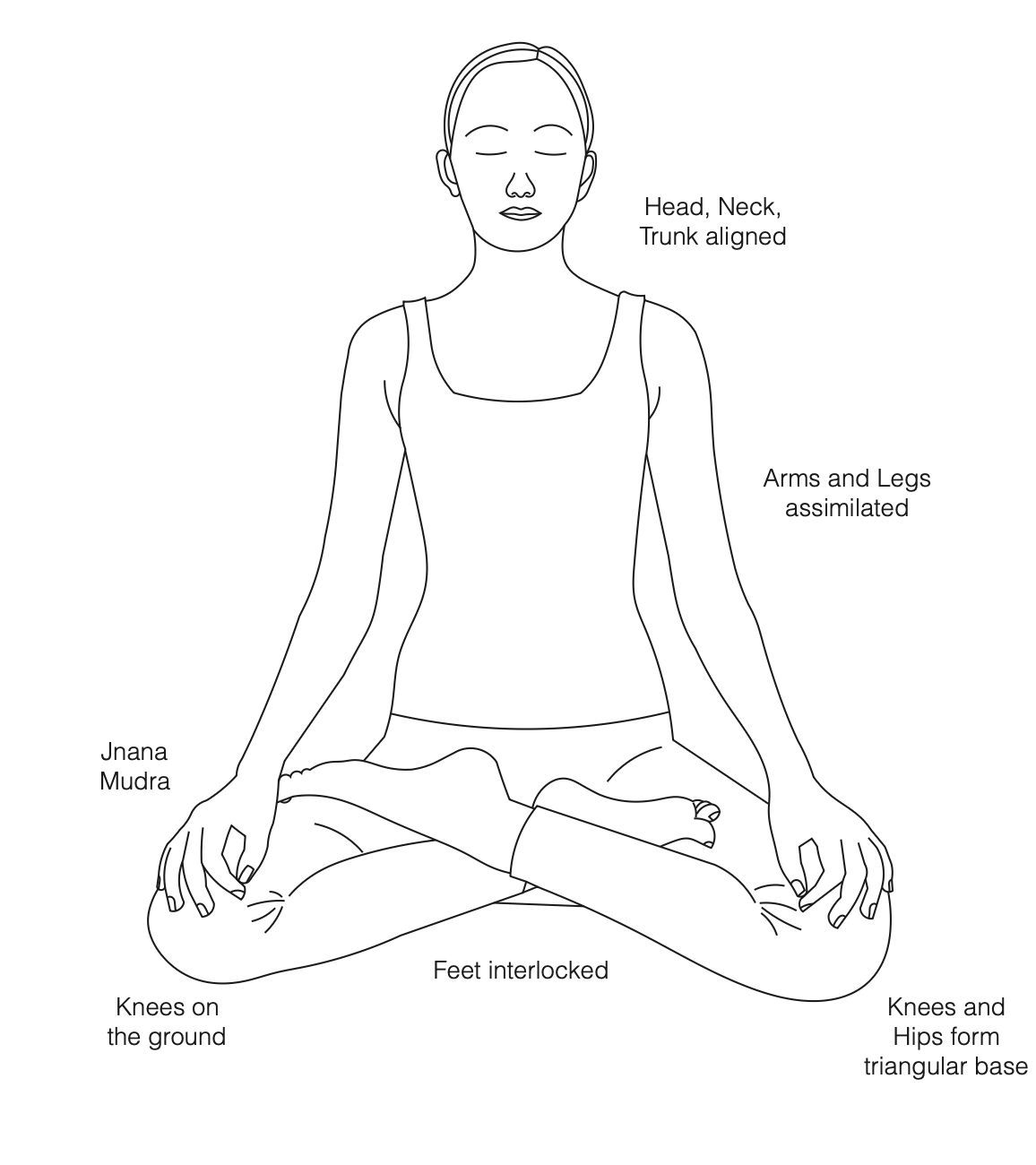
Padmasana Credit: Mastering Pranayama by Radhika Shah Grouven
Padmasana is the symbol of Yoga. Yogis, sages and saints are often seen sitting in Padmasana in ancient sculptures or paintings.
Sit on your meditation blanket. Bend your right leg and place the right foot on the left thigh, then bend your left leg and place the left foot on the right thigh; vice versa is also possible. This is the Lotus Pose.
In Padmasana both the legs are well assimilated and the feet are completely interlocked together. It is not possible to unconsciously come out of this position nor to slip out of it. It is best to master the Half Lotus Pose before you attempt the Lotus Pose.
Padmasana forms an ideal stable base for sitting for longer periods but unfortunately it also requires great flexibility. Apart from the fact that it is an extremely difficult posture to master, Padmasana is a symbolic posture and not really suitable for those aspiring to attain a high degree of proficiency on this path. It can be practiced for shorter periods of time to develop flexibility of the lower limbs.
Svastikasana: The Auspicious Pose
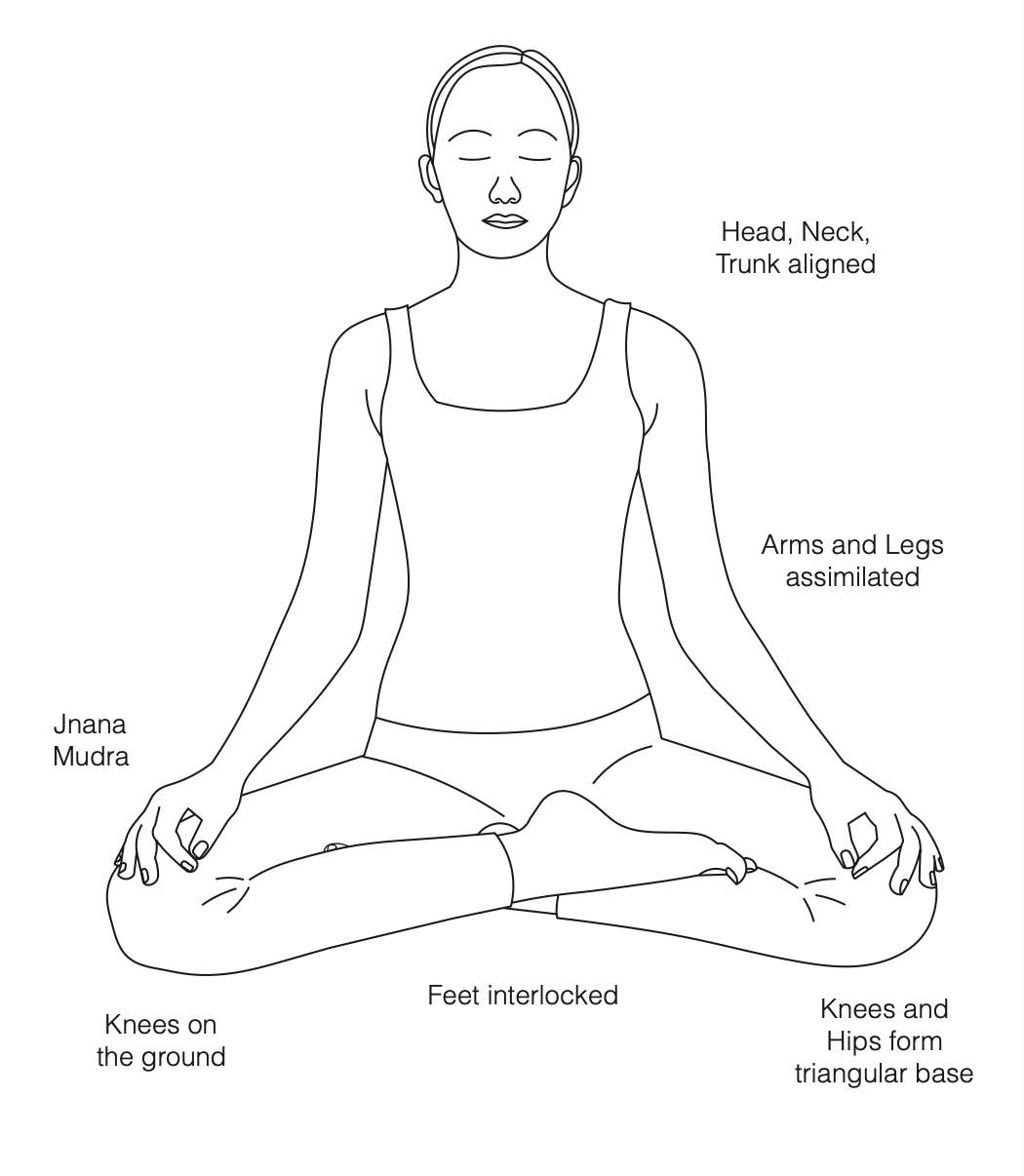
Svastikasana Credit: Mastering Pranayama by Radhika Shah Grouven
To sit in Svastikasana, bend the left leg and place the left foot alongside the right thigh. The sole of the left foot lies flat against the inside of the right thigh. Next, bend the right knee, and place the right foot gently between the left thigh and left calf. Finally, pull up the toes of your left foot up between the right thigh and calf, so that the big toe is visible.
In the Auspicious Pose or Svastikasana, head, neck and trunk are well aligned. If necessary, you can use layers of shawls. The two knees and the base of the spine form the three corners of a triangle, so that the legs and hips make a stable, triangular base. The base is firm on the floor, giving the pose greater stability. The extremities are well assimilated and the feet are interlocked together. If the ankle is resting directly on the floor, it may hurt, therefore always use a soft woolen blanket as a base. Keeping the feet interlocked may not appear to be important in the initial stages, but at a later stage it is very useful for those who aspire to practice dhyana or “deep meditation” and awaken kundalini.
Kundalini is an ancient word, a technical word from a forgotten science. Most people call kundalini a kind of energy, but they have no direct experience of this energy. The symbol of kundalini is the serpent. This is a symbol of our dark side or the deep unconscious mind. The energy of the unconscious mind is transmuted and raised to the conscious state of awareness. This is called kundalini in the ancient science of Tantra. If you are well prepared, it is possible to bring the unconscious mind into conscious awareness. As the unconscious mind comes forward, you may get agitated; keeping the feet interlocked together prevents you from unconsciously jumping out of the posture. If you are sitting in Sukhasana or Ardha Padmasana, you can unconsciously slip out of your position very easily, but if you are sitting with the feet interlocked as in Padmasana or Svastikasana you cannot. If you are already comfortable sitting on the floor, you are not overweight and have no injuries then it is worth the effort to master Svastikasana. It is one of the easiest as well as one of the best positions to sit in for breathing exercises, pranayama and eventually dhyana.
You can use shawls to support the knees but all these props should be used only in the short-term. Props used over an extended period of time are not useful; they create dependency and do not really make the practitioner more flexible. In this case it is better to sit on the chair or in Sukhasana as well as practice asanas that promote flexibility.
While trying to master Svastikasana you may experience cramps occasionally and may want to stretch your legs or shift into Sukhasana. However, continuous movement or changes in the posture are not very useful. If you do this all the time, you will never develop the habit of sitting still. Every time you stretch your legs or change your posture, you come back to the body level, preventing yourself from having a deeper experience of the practice. It is important to sit for progressively longer sessions in Svastikasana without movement. To facilitate this, you need to practice a few joints and glands loosening exercises and asanas that develop flexibility of the body, keeping in mind that an undue emphasis on body culture is not required. You can practice loosening exercises such as ankle rotation, Vajrasana, Padmasana or any other asana, which will develop the flexibility of the ankles and knees. These will prevent cramps and discomfort. If you skip the loosening exercises or not do enough, you will be torturing yourself, creating tension in the body and nervous system. This may be counterproductive. A more active lifestyle, for instance, daily walks and sports will also improve overall circulation in the body and prevent cramps.
Often people cannot sit in meditative postures because they are overweight. This problem can only be solved by losing weight through change in diet and lifestyle.
Siddhasana: The Accomplished Pose
In Siddhasana, the left heel is placed at the perineum, between the anus and the genitals. The right heel is placed at the pubic bone above the organ of generation. The feet and legs are arranged so that the ankle joints are in one line or touch each other. The toes of the right foot are placed between the left thigh and calf so that only the big toe is visible; the toes of the left foot are pulled up between the right thigh and calf so that the big toe is visible.
The triangular base formed by the knees and the hips in Siddhasana is not as wide as in Svastikasana. The knees move closer inward and the heels under the body. Svastikasana naturally leads to Siddhasana.
Siddhasana is suitable for both men as well as women. However, women may find it uncomfortable for longer periods of time. Women may prefer Svastikasana for this reason.
What is the Best Posture for me?
Siddhasana is a pose we should not try to force upon ourselves. When students force themselves to sit in this position, the body gets tense, the muscles of the back are strained and the arms and shoulders become stiff. It is impossible to meditate if your entire body is tense. Do not force yourself into Siddhasana because you think it is more advanced than Svastikasana.
The best pose for you is the one that is most comfortable and in which you can sit for longer periods. If you have selected a pose in which you are not comfortable, then select an easier pose. If you are comfortable and can sit longer time in this position then this is the right pose for you. If you are using too many props, then go back to Maitri Asana or Sukhasana. After a few months of joints and glands loosening exercises and asanas you will be able to sit comfortably in Sukhasana or even Svastikasana with the support of a few layers of shawls.
For those who want to do just a little bit for your well-being, it is fine to sit in Maitri Asana or in Sukhasana for a short period of time. If you really aspire to master systematic meditation leading to self-knowledge, then build up your practice gradually until you are able to sit comfortably in Svastikasana for a longer period of time. Then, it might happen quite naturally and effortlessly that one day you slip into Siddhasana.